
- Us Usb Devices Driver Updater
- Us USB Devices Driver
- Microsoft Usb Video Device Driver Windows 10
- Usb Device Drivers Windows 10
- Unknown Usb Device Driver Download
To install, open Device Manager Universal Serial Bus controllers right-click USB Root Hub (USB 3.0) Uninstall Device reboot PC. To re-install a specific device, navigate to the above but select Properties Driver Update Driver to install from your PC. Connect a USB 3.0 flash drive (USB Mass Storage Device) to one of the Intel USB 3.0 ports. In Device Manager, click View, and click Devices by connection. In Devices by connection view, you can easily see the USB Mass Storage device under the Intel® USB 3.0 eXtensible Host Controller category. The USB driver is outdated; The USB Driver is missing; Or even a corrupted driver; While you can't be so sure what the exact problem is there are solutions you can adopt to fix the issue once and for all. Read on to find quick fixes to resolve the problem. 1# Fix Prolific USB to Serial Driver not Working Solution: Roll your Prolific USB to.
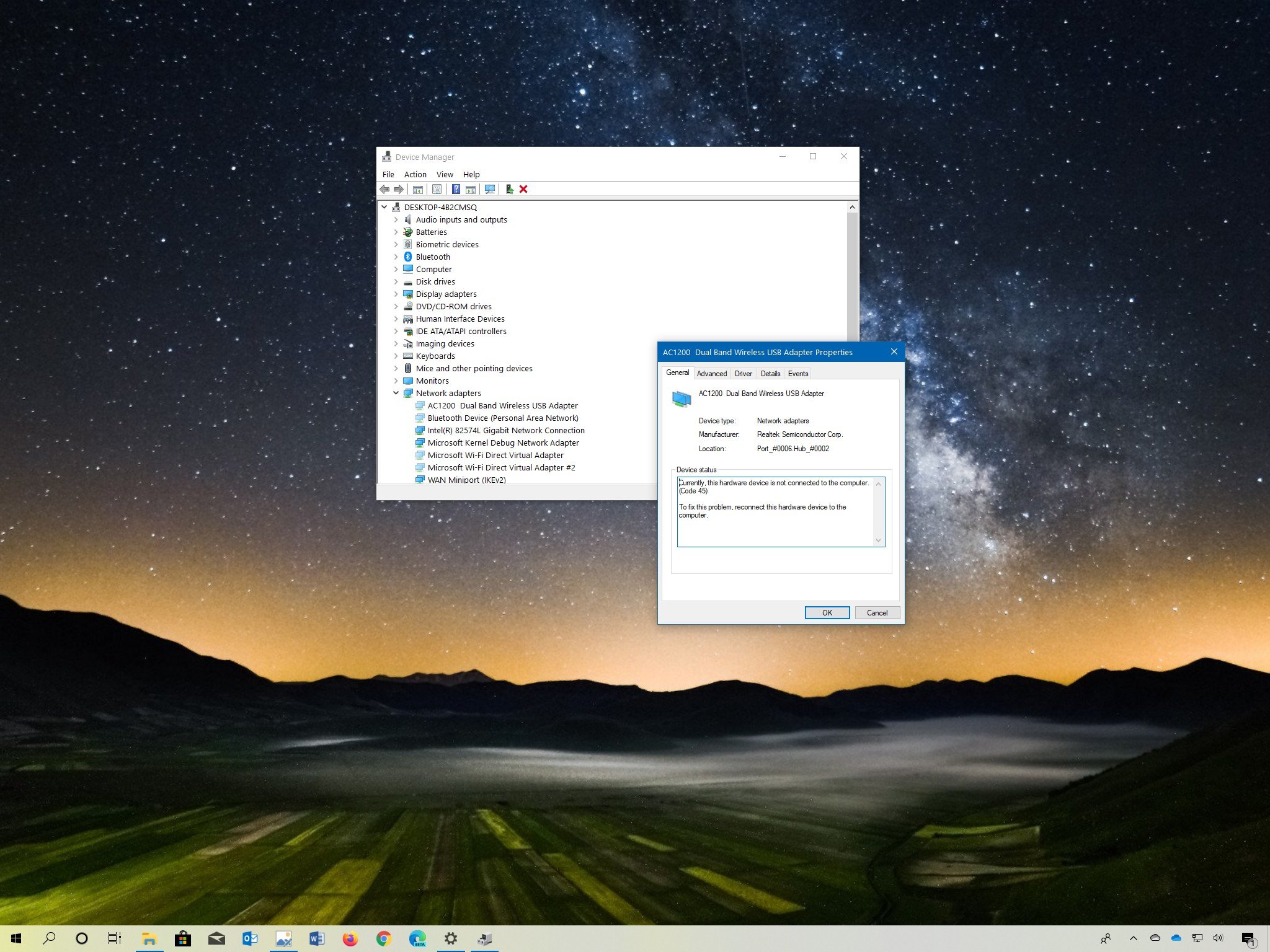
Plug in your device to the host system. Open Device Manager and locate the device. Select and hold (or right-click) the device and select Update driver software. From the context menu. In the wizard, select Browse my computer for driver software. Having an issue with your display, audio, or touchpad? Whether you're working on an Alienware, Inspiron, Latitude, or other Dell product, driver updates keep your device running at top performance. Step 1: Identify your product above. Step 2: Run the detect drivers scan to see available updates. Step 3: Choose which driver updates to install.
If your computer doesn't recognize your connected device, you might see an unknown error or a '0xE' error. If you do, follow these steps and try to connect your device again after each step:
- Make sure that your iOS or iPadOS device is unlocked and on the Home screen.
- Check that you have the latest software on your Mac or Windows PC. If you're using iTunes, make sure you have the latest version.
- Make sure that your device is turned on.
- If you see a Trust this Computer alert, unlock your device and tap Trust.
- Unplug all USB accessories from your computer except for your device. Try each USB port to see if one works. Then try a different Apple USB cable.*
- Restart your computer.
- Restart your device:
- Try connecting your device to another computer. If you have the same issue on another computer, contact Apple Support.
For more help, follow the steps below for your Mac or Windows PC.
* Learn how to connect iPad Pro (11-inch) or iPad Pro 12.9-inch (3rd generation) to your computer.
If you use a Mac
- Connect your iOS or iPadOS device and make sure that it's unlocked and on the Home screen.
- On your Mac, hold down the Option key, click the Apple menu, and choose System Information or System Report.
- From the list on the left, select USB.
- If you see your iPhone, iPad, or iPod under USB Device Tree, get the latest macOS or install the latest updates. If you don't see your device or still need help, contact Apple Support.
If you use a Windows PC
The steps differ depending on if you downloaded iTunes from the Microsoft Store or from Apple.
If you downloaded iTunes from the Microsoft Store
Follow these steps to reinstall the Apple Mobile Device USB driver:
- Disconnect your device from your computer.
- Unlock your iOS or iPadOS device and go to the Home screen. Then reconnect your device. If iTunes opens, close it.
- Click and hold (or right-click) the Start button, then choose Device Manager.
- Locate and expand the Portable Devices section.
- Look for your connected device (such as Apple iPhone), then right-click on the device name and choose Update driver.
- Select 'Search automatically for updated driver software.'
- After the software installs, go to Settings > Update & Security > Windows Update and verify that no other updates are available.
- Open iTunes.
If you downloaded iTunes from Apple
Follow these steps to reinstall the Apple Mobile Device USB driver:
- Disconnect your device from your computer.
- Unlock your iOS or iPadOS device and go to the Home screen. Then reconnect your device. If iTunes opens, close it.
- Press the Windows and R key on your keyboard to open the Run command.
- In the Run window, enter:
%ProgramFiles%Common FilesAppleMobile Device SupportDrivers - Click OK.
- Right-click on the
usbaapl64.inforusbaapl.inffile and choose Install.
You might see other files that start withusbaapl64orusbaapl. Make sure to install the file that ends in .inf. If you’re not sure which file to install, right-click a blank area in the File Explorer Window, click View, then click Details to find the correct file type. You want to install the Setup Information file. - Disconnect your device from your computer, then restart your computer.
- Reconnect your device and open iTunes.
If your device still isn't recognized
Check Device Manager to see if the Apple Mobile Device USB driver is installed. Follow these steps to open Device Manager:
- Press the Windows and R key on your keyboard to open the Run command.
- In the Run window, enter
devmgmt.msc, then click OK. Device Manager should open. - Locate and expand the Universal Serial Bus controllers section.
- Look for the Apple Mobile Device USB driver.
If you don't see the Apple Mobile Device USB Driver or you see Unknown Device:
- Connect your device to your computer with a different USB cable.
- Connect your device to a different computer. If you have the same issue on another computer, contact Apple Support.
If you see the Apple Mobile Device USB driver with an error symbol:
If you see , , or next to the Apple Mobile Device USB driver, follow these steps:
- Restart the Apple Mobile Device Service.
- Check for and resolve issues with third-party security software, then restart your computer.
- Try to install the
usbaapl64.inforusbaapl.inffile again.
| Author: | Greg Kroah-Hartman |
|---|
Introduction
The Linux USB subsystem has grown from supporting only two differenttypes of devices in the 2.2.7 kernel (mice and keyboards), to over 20different types of devices in the 2.4 kernel. Linux currently supportsalmost all USB class devices (standard types of devices like keyboards,mice, modems, printers and speakers) and an ever-growing number ofvendor-specific devices (such as USB to serial converters, digitalcameras, Ethernet devices and MP3 players). For a full list of thedifferent USB devices currently supported, see Resources.
The remaining kinds of USB devices that do not have support on Linux arealmost all vendor-specific devices. Each vendor decides to implement acustom protocol to talk to their device, so a custom driver usuallyneeds to be created. Some vendors are open with their USB protocols andhelp with the creation of Linux drivers, while others do not publishthem, and developers are forced to reverse-engineer. See Resources forsome links to handy reverse-engineering tools.
Because each different protocol causes a new driver to be created, Ihave written a generic USB driver skeleton, modelled after thepci-skeleton.c file in the kernel source tree upon which many PCInetwork drivers have been based. This USB skeleton can be found atdrivers/usb/usb-skeleton.c in the kernel source tree. In this article Iwill walk through the basics of the skeleton driver, explaining thedifferent pieces and what needs to be done to customize it to yourspecific device.
Linux USB Basics
If you are going to write a Linux USB driver, please become familiarwith the USB protocol specification. It can be found, along with manyother useful documents, at the USB home page (see Resources). Anexcellent introduction to the Linux USB subsystem can be found at theUSB Working Devices List (see Resources). It explains how the Linux USBsubsystem is structured and introduces the reader to the concept of USBurbs (USB Request Blocks), which are essential to USB drivers.
The first thing a Linux USB driver needs to do is register itself withthe Linux USB subsystem, giving it some information about which devicesthe driver supports and which functions to call when a device supportedby the driver is inserted or removed from the system. All of thisinformation is passed to the USB subsystem in the usb_driverstructure. The skeleton driver declares a usb_driver as:
The variable name is a string that describes the driver. It is used ininformational messages printed to the system log. The probe anddisconnect function pointers are called when a device that matches theinformation provided in the id_table variable is either seen orremoved.
The fops and minor variables are optional. Most USB drivers hook intoanother kernel subsystem, such as the SCSI, network or TTY subsystem.These types of drivers register themselves with the other kernelsubsystem, and any user-space interactions are provided through thatinterface. But for drivers that do not have a matching kernel subsystem,such as MP3 players or scanners, a method of interacting with user spaceis needed. The USB subsystem provides a way to register a minor devicenumber and a set of file_operations function pointers that enablethis user-space interaction. The skeleton driver needs this kind ofinterface, so it provides a minor starting number and a pointer to itsfile_operations functions.
The USB driver is then registered with a call to usb_register(),usually in the driver’s init function, as shown here:
When the driver is unloaded from the system, it needs to deregisteritself with the USB subsystem. This is done with the usb_deregister()function:
To enable the linux-hotplug system to load the driver automatically whenthe device is plugged in, you need to create a MODULE_DEVICE_TABLE.The following code tells the hotplug scripts that this module supports asingle device with a specific vendor and product ID:
There are other macros that can be used in describing a structusb_device_id for drivers that support a whole class of USBdrivers. See usb.h for more information on this.
Device operation
Us Usb Devices Driver Updater
When a device is plugged into the USB bus that matches the device IDpattern that your driver registered with the USB core, the probefunction is called. The usb_device structure, interface number andthe interface ID are passed to the function:
The driver now needs to verify that this device is actually one that itcan accept. If so, it returns 0. If not, or if any error occurs duringinitialization, an errorcode (such as -ENOMEM or -ENODEV) isreturned from the probe function.
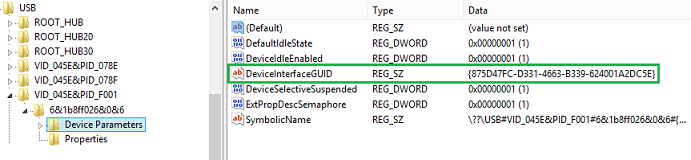

In the skeleton driver, we determine what end points are marked asbulk-in and bulk-out. We create buffers to hold the data that will besent and received from the device, and a USB urb to write data to thedevice is initialized.
Conversely, when the device is removed from the USB bus, the disconnectfunction is called with the device pointer. The driver needs to cleanany private data that has been allocated at this time and to shut downany pending urbs that are in the USB system.
Now that the device is plugged into the system and the driver is boundto the device, any of the functions in the file_operations structurethat were passed to the USB subsystem will be called from a user programtrying to talk to the device. The first function called will be open, asthe program tries to open the device for I/O. We increment our privateusage count and save a pointer to our internal structure in the filestructure. This is done so that future calls to file operations willenable the driver to determine which device the user is addressing. Allof this is done with the following code:
After the open function is called, the read and write functions arecalled to receive and send data to the device. In the skel_writefunction, we receive a pointer to some data that the user wants to sendto the device and the size of the data. The function determines how muchdata it can send to the device based on the size of the write urb it hascreated (this size depends on the size of the bulk out end point thatthe device has). Then it copies the data from user space to kernelspace, points the urb to the data and submits the urb to the USBsubsystem. This can be seen in the following code:
When the write urb is filled up with the proper information using theusb_fill_bulk_urb() function, we point the urb’s completion callbackto call our own skel_write_bulk_callback function. This function iscalled when the urb is finished by the USB subsystem. The callbackfunction is called in interrupt context, so caution must be taken not todo very much processing at that time. Our implementation ofskel_write_bulk_callback merely reports if the urb was completedsuccessfully or not and then returns.
The read function works a bit differently from the write function inthat we do not use an urb to transfer data from the device to thedriver. Instead we call the usb_bulk_msg() function, which can be usedto send or receive data from a device without having to create urbs andhandle urb completion callback functions. We call the usb_bulk_msg()function, giving it a buffer into which to place any data received fromthe device and a timeout value. If the timeout period expires withoutreceiving any data from the device, the function will fail and return anerror message. This can be shown with the following code:
The usb_bulk_msg() function can be very useful for doing single readsor writes to a device; however, if you need to read or write constantly toa device, it is recommended to set up your own urbs and submit them tothe USB subsystem.
When the user program releases the file handle that it has been using totalk to the device, the release function in the driver is called. Inthis function we decrement our private usage count and wait for possiblepending writes:
One of the more difficult problems that USB drivers must be able tohandle smoothly is the fact that the USB device may be removed from thesystem at any point in time, even if a program is currently talking toit. It needs to be able to shut down any current reads and writes andnotify the user-space programs that the device is no longer there. Thefollowing code (function skel_delete) is an example of how to dothis:
If a program currently has an open handle to the device, we reset theflag device_present. For every read, write, release and otherfunctions that expect a device to be present, the driver first checksthis flag to see if the device is still present. If not, it releasesthat the device has disappeared, and a -ENODEV error is returned to theuser-space program. When the release function is eventually called, itdetermines if there is no device and if not, it does the cleanup thatthe skel_disconnect function normally does if there are no open fileson the device (see Listing 5).
Isochronous Data
This usb-skeleton driver does not have any examples of interrupt orisochronous data being sent to or from the device. Interrupt data issent almost exactly as bulk data is, with a few minor exceptions.Isochronous data works differently with continuous streams of data beingsent to or from the device. The audio and video camera drivers are verygood examples of drivers that handle isochronous data and will be usefulif you also need to do this.
Conclusion
Writing Linux USB device drivers is not a difficult task as theusb-skeleton driver shows. This driver, combined with the other currentUSB drivers, should provide enough examples to help a beginning authorcreate a working driver in a minimal amount of time. The linux-usb-develmailing list archives also contain a lot of helpful information.
Us USB Devices Driver
Resources
The Linux USB Project:http://www.linux-usb.org/
Linux Hotplug Project:http://linux-hotplug.sourceforge.net/

Microsoft Usb Video Device Driver Windows 10
linux-usb Mailing List Archives:https://lore.kernel.org/linux-usb/
Usb Device Drivers Windows 10
Programming Guide for Linux USB Device Drivers:https://lmu.web.psi.ch/docu/manuals/software_manuals/linux_sl/usb_linux_programming_guide.pdf
Unknown Usb Device Driver Download
USB Home Page: https://www.usb.org